
Before the invention of keto
The first time I heard the word 'keto' or 'ketogenic', I had an involuntary smile. It was not a smile of disdain, but of deep recognition, almost of relief. I realized that the modern world had just put a scientific and complex name on what my grandmother made every day in her mountain kitchen, without ever needing technical terms. No refined grains? She had never used them, because they had no place in our environment. Quality proteins? It was his top priority, the foundation of every meal. Non-starchy vegetables? It was its base, what brought freshness and life. Natural fats? She valued them like the liquid gold they are. What the world today calls an ideological choice or a fad diet was, for us, simply the way of living and cooking.
In the Andes, we didn't eat that way because we decided it was 'better' after reading a blog article or clinical study. We ate this way because it was what was possible, what was available, and most importantly, what worked to keep us alive and strong in extreme conditions. The low-carb framework is not a laboratory invention; it is the formalization of millennia-old empirical wisdom. By rediscovering these principles, modern man is only rediscovering the instructions for using his own body, a method of use that the mountain peoples have never lost. It is a reconciliation between the most cutting-edge science and the oldest tradition.
Fire as an immemorial foundation
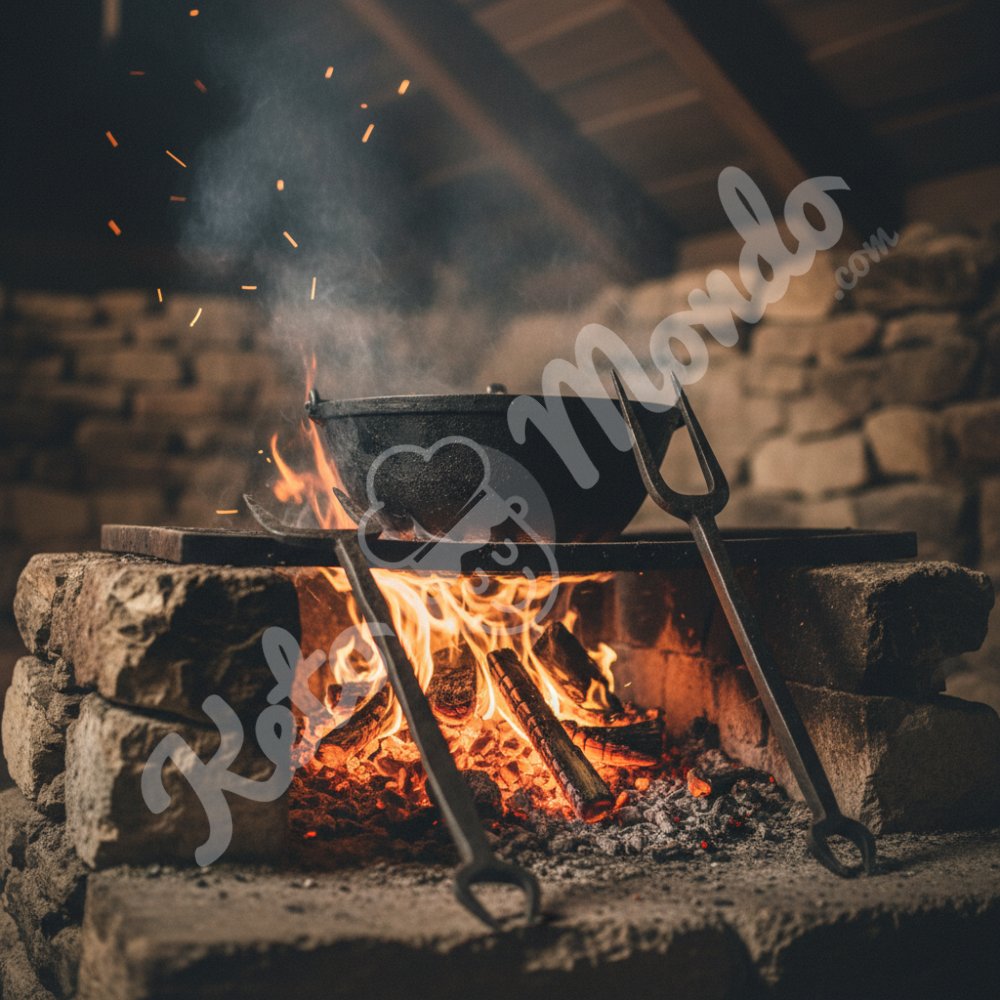
Fire is humanity's first tool, the one that allowed us to become what we are. Long before the invention of agriculture, long before the pyramids or writing, there was the hearth. And anyone who has spent time in front of an open flame has quickly discovered a fundamental truth: Some foods are made for fire, and others are not. Animal proteins and dense vegetables reveal themselves beautifully in the heat; they transform, concentrate and become more digestible. Conversely, cereals and quick sugars do not lend themselves well to this direct cooking; they burn, dry out or require complex transformations to become edible. This revelation by fire is ancestral, immemorial. It is written in our cellular memory.
This is where clarity emerges: the low-carb framework is not a break with the past, it is a return to the source. It's accepting that our metabolism has been forged by millions of years of cooking over fires and eating dense foods. Fire doesn't lie. He taught us, generation after generation, what truly nourishes us and what is just filler. By choosing to cook on the grill, we reconnect with this school of truth. We leave aside the artifices of the food industry to rediscover the purity of the original gesture. Fire is the guardian of our health, the silent witness to a time when eating was an act of direct connection with the elements.
Continuity rather than revolution
I don't pretend to invent anything new. I'm not a nutrition guru or culinary innovator. I am a conduit, a witness to what my ancestors practiced with quiet efficiency. When I help people adopt a low-carb diet, I am not offering them a revolution, but a continuation. I invite them to join an uninterrupted lineage of know-how and wisdom. This perspective changes everything. We no longer feel like someone who is following a passing fashion or imposing an arbitrary restriction on themselves. You feel like someone coming home, finding your roots, and honoring your biological heritage.
This continuity has a power that ephemeral trends will never have. It is stable, it is rooted, it is proven by time. She doesn't depend on the latest kitchen gadget or trendy superfood. It depends on the quality of the product, heat control and respect for the body. By accepting that we are returning to an ancestral way of eating, we also accept a certain humility. We recognize that wisdom is not something we create from scratch, but something we find by listening to the ancients and observing nature. It is a quiet strength that makes us more resilient in the face of the storms of the modern world.
Respect for the past as clarity of the present
When I cook, I don't try to modernize for the sake of something new. I seek to honor. By reproducing my grandmother's actions in front of her home, I discover that I am creating something extremely relevant to today's health challenges. Obesity, diabetes, chronic inflammation — all these modern ills find their remedy in the simplicity of the past. This is where the true beauty of this approach lies: the ancestral and the modern are not in conflict, they converge towards the same truth. Wisdom is timeless because the basic needs of the human body have not changed.
Honoring the past also means providing clarity for the present. In a world saturated with conflicting information about nutrition, returning to the fundamentals of fire and earth is an infallible compass. We stop getting lost in insignificant details and focus on what really matters. We rediscover the pleasure of eating whole foods, prepared with care and shared with love. This clarity allows us to live better, longer and with more intensity. This is the gift our ancestors gave us: a path to vitality, which we only have to follow with respect and gratitude.
For those seeking authenticity
If you're looking for validation for your choice of a low-carb diet, don't just look for it in scientific journals, although those are helpful. Look for it in the history of humanity. Look at what people ate before the advent of the food industry, before sugar became a global drug, before grains replaced protein as the basis of our diet. You will find that what we are doing today is not an anomaly, but a return to normal. It is a quest for authenticity, a refusal of sugary illusions to find the substance of reality.
When you start cooking like this — not because a trend dictates it, but because history shows it — you discover a deep peace. You no longer fight against your own nature, you no longer fight against your instincts. You are saturating them with what they have always been asking for. Fire, meat, herbs, salt. It's simple, it's powerful, and it's eternal. By joining this tradition, you in turn become a link in the chain, a keeper of the flame. And it is in this belonging to something greater that you will find the strength to transform your health and your life, one meal at a time, with the blessing of fire.