
Density as survival
I was born in a long, serious, almost motionless winter. There, the seasons are no joke: when the snow lasts for months, you need unwavering energy to get through the day, to work the wood or the earth, to remain mentally available despite the bite of the air. Inevitably, local cuisine was organized around raw necessity — not ephemeral indulgence. The primary function of the meals was to provide lasting nourishment, to create internal heat that would not go out at the first gust of wind, and above all to avoid those glycemic dips which would force one to look for quick and inefficient fuels.
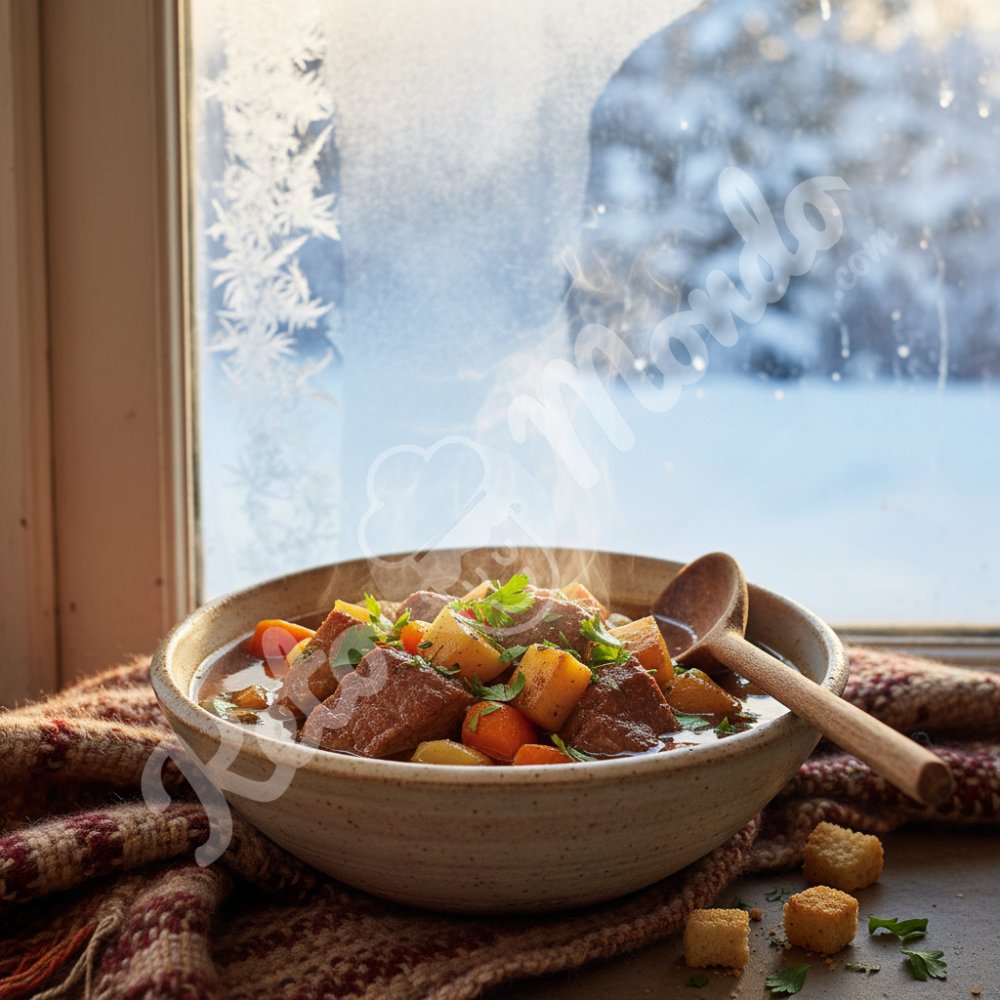
Frost on the windows. The silence of the petrified forest. My body demands something heavy, something real.
In this climate, fast sugars and refined cereals are dangerous lures: they give an illusion of energy, a flash in the pan that quickly goes out, leaving a greater emptiness and icy fatigue. Bodies accustomed to the cold require consistency, not jolts. This is why our culinary culture has always favored natural proteins and fats — smoked fish, braised meats, animal fats, first-pressed raw oils — which keep the metabolic fire burning much longer. There is nothing orthodox about this, it is an implacable logic of product towards energy: what the landscape offers, we use to make the day go on.
I cooked for years for men and women who needed to be alert at work, not numbed by a poorly designed meal. A dish that was aesthetically pleasing but void of nutrients made no sense here. We were looking for consistency: a consistency of energy, a satiety that does not transform the afternoon into an exhausting fight against drowsiness. This is what proteins offer, supported by high-quality fats: a slow absorption that saves, a heat that diffuses slowly, a digestibility that respects the body when it has to face the external elements.
I remember my grandfather, eating his bacon in silence before going out. He didn't know the word 'ketosis', but he lived with it every day.
Culture, adaptation and memory of the body
It's not just a question of physiology; it is a matter of deep culture. The dishes shared in winter tell a story of conservation, product economy and respect for natural cycles. Thick soups and stews that simmer for hours are not excess calories, they are survival strategies to distribute energy over time. In this way, the low-carb approach that I defend today is not a foreign import; it resembles exactly what our ancestors practiced out of pure common sense: less sugar, more density, more respect for human fuel.
When I look at young people today, I see the same logic at work, even though they no longer live in the woods. Replacing a sugary snack with a source of fat and protein prolongs concentration and reduces compulsive cravings that inevitably occur after insulin spikes. Digestive comfort also gains enormously; in the cold, stable digestion avoids internal tensions which quickly become unbearable once outside in the freezing air. The body can focus on its thermoregulation rather than managing an influx of unnecessary glucose.
The steam escaping from the pot. A smell of smoke and roots.
In conclusion, the relationship with the cold has sculpted a relationship with the meal which aims for constancy rather than excitement. Letting the heat of the dish last in the body, seeking satiety which does not tire you out, is climatic wisdom. When we understand this, the reduction of sugars and cereals is no longer a fashion: it becomes a logical, almost poetic response to the place and its demands. It's regaining a lost confidence in our ability to nourish ourselves for good.
When I saw the carpenters taking a break in the morning, they didn't need an energy bar or a sugary coffee. A piece of bacon, a piece of old cheese, a spoonful of fat taken from yesterday's dish was enough. These gestures, repeated a thousand times, are not archaisms: they are biological solutions proven to the challenge of a long day. The landscape imposes reality, and the people who live there learn to respond to it directly, with an honesty that is reflected on the plate.
What I see now is that those who adopt this diet rediscover this feeling of sovereign stability. Energy variations fade. The cravings disappear. And gradually, we see that the cold is no longer perceived as a threat, but as a natural condition that makes sense. The body and mind finally work together, without the glycemic friction that parasitizes the days of those who eat fast sugars.
I would also like to remind you that understanding cold can be transmitted through taste. Sharing a meal constructed slowly, where each element has been designed to last, is to offer much more than just food. It is proposing a grammar of well-being, inscribed in centuries-old gestures. Finally, recognizing that cold has a pedagogy, and that low-carb cooking is the natural response to this school, is to find deep peace. The cold, if it is harsh, teaches the truth — and its lesson is the best I know.
I serve the dish. The steam rises. I'm ready.