
A geometry of satiety
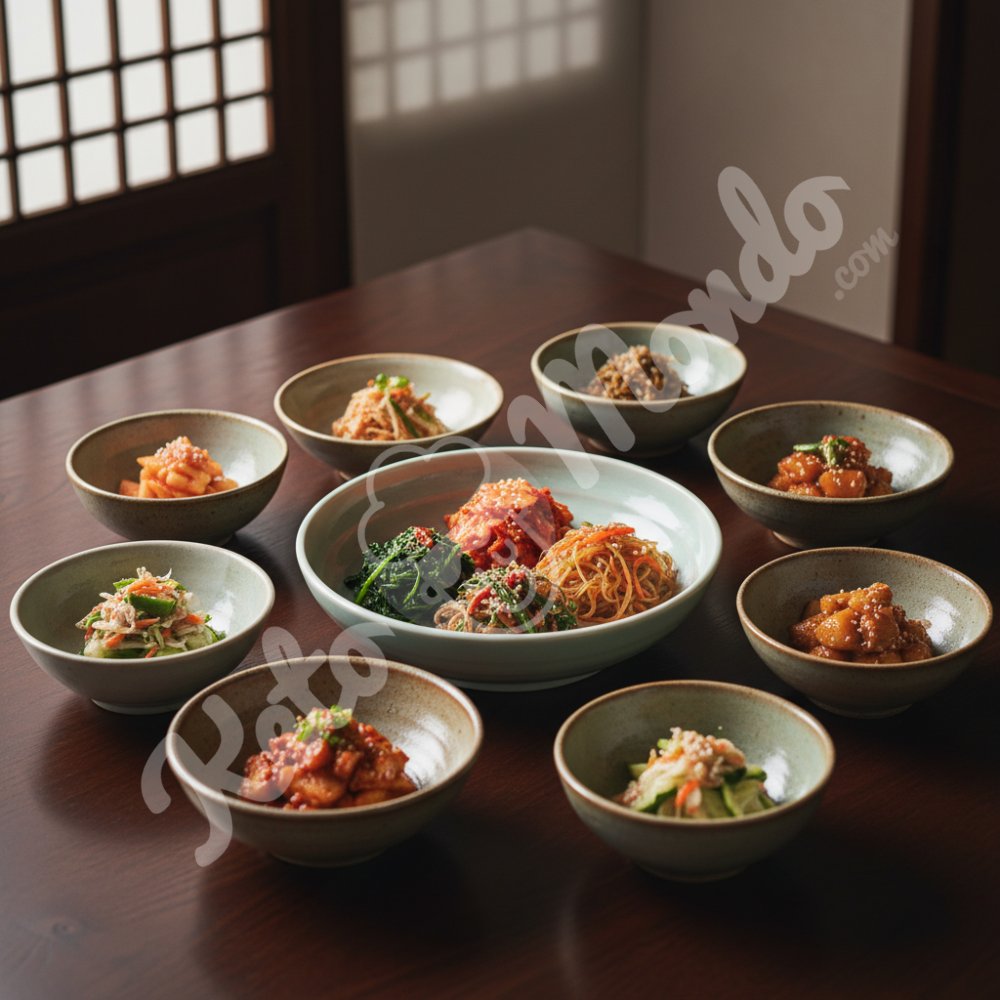
A traditional Korean meal is never a monolithic mass thrown onto a single plate. It's a constellation. When I set the table, I don't think in terms of 'main course' and side dishes, but in terms of relationships. There is the small bowl of clear soup that sings of the sea, the braised lotus roots which offer their earthy crunch, the spinach blanched in sesame oil, and of course, the kimchi, that beating and acidic heart. This structure, which we call banchan, was not born from an aesthetic desire, although beauty is omnipresent. It was born from an age-old observation of the body: for the mind to be soothed and the stomach to be satisfied without being weighed down, diversity is needed, not quantity.
In this architecture, rice – once central – is now fading to give way to an explosion of nutrients. For those of us on a low-carb path, this structure is a blessing. It allows us to saturate our sensory sensors even before the first bite is swallowed. Looking at these ten or twelve little bowls tells the brain that abundance is there. We don't eat to fill a void, we eat to explore a landscape. Each small dish is a stopover, a different texture, a varied temperature. It is this fragmentation which creates metabolic balance: we cannot rush on a mountain of starchy foods when we are invited to peck, with fine chopsticks, treasures of fiber and healthy fats.
The Korean paradox
There is a fascinating paradox in having more dishes to eat less. In the modern Western view, we reduce portions to lose weight. In Korea, we multiply the bowls to gain awareness. When you're presented with a multitude of flavors — the spiciness of gochugaru, the deep umami of fermented soy, the bitter sweetness of mountain herbs — your palate is constantly engaged. He doesn't fall asleep to the monotony of a mash or a pasta dish. This constant stimulation sends early satiety signals. The body understands that it receives everything it needs: minerals, vitamins, probiotics, essential fatty acids.
This multitude also imposes a rhythm. You cannot 'gobble up' a meal consisting of banchan. We alternate, we taste, we return to a bowl, we discover a nuance. This forced slowdown is our insulin’s best ally. By eating slowly, giving the flavors time to unfold, we allow our hormonal system to adjust. Blood sugar does not jump, it undulates gently. It is a moderation that requires no effort of will, because it is inscribed in the very structure of the ritual. We finish the meal not 'full', but 'complete'. It's a subtle distinction that changes everything for our metabolism.
Beyond macros
We often talk about 'macros' in the keto world — so much fat, so much protein. But the body doesn't eat numbers, it eats complex molecules. The structure of Korean small dishes is a lesson in applied micronutrition. By varying the sources – a little dried fish, a few bean sprouts, shiitake mushrooms, seaweed – we ensure nutritional coverage that no single dish can offer. In a low-carb approach, where we remove the cereals which served as 'filling', this diversity becomes vital. We don't replace rice with more meat, we replace it with more life, more colors, more vegetable textures.
This richness of taste experience also nourishes the mind. Frustration, this great enemy of diets, is born from monotony. Monotony is impossible here. Every bite is new information. We feel rich, we feel pampered by the earth. This mental satiety is the guarantor of the sustainability of our way of life. When the meal is a symphony, you don't need a sugary reminder at the end. The cycle is complete, the satisfaction is total. It is completeness through diversity, a pillar of ancestral wisdom that we are rediscovering today under the name of nutritional density.
Ritual as an invisible discipline
Arranging the small dishes on the table is an act of meditation. It’s a discipline that doesn’t say its name. By taking the time to prepare for this scene, you prepare your body to receive. We leave the urgency of everyday life to enter meal time. This transition is crucial for digestion. A stressed body does not digest, it stores. A body soothed by ritual, by the sight of order and beauty, activates its parasympathetic functions. It is ready to transform these fats and proteins into pure energy, into mental clarity.
This discipline is not a constraint, it is a respect. Respect for the ingredients that took time to grow, respect for the ferment that worked in the shadows, respect for yourself. For those following a low-carb diet, this ritual transforms 'restriction' into 'elevation'. We don't deprive ourselves of bread, we treat ourselves to a constellation of flavors. The body responds to this respect with a stability of energy that lasts for hours. There's no crash, no brain fog, just the clear feeling of being perfectly nourished, down to the milligram.
The art of composing your constellation plate
Applying this wisdom to your daily life isn't about becoming an expert in Korean cooking overnight. It’s about adopting the philosophy of fragmentation. Instead of serving a large portion of meat and broccoli, try dividing your plate. A small pile of sauerkraut or kimchi for probiotics, a few nuts for crunch and fat, slices of avocado, a small fresh herb salad, and your grilled protein. Each element must be distinct. This visual separation changes the perception of satiety.
It's a return to basics: the structure of the meal is the foundation of our health. When it is fair, when it honors diversity and time, everything else follows. Moderation becomes natural, satiety becomes profound, and the pleasure of eating becomes a source of constant vitality. It's the secret of the ancients, hidden in the simplicity of a few small bowls lovingly placed on a wooden table.