
Liquid wisdom in the heart of the home
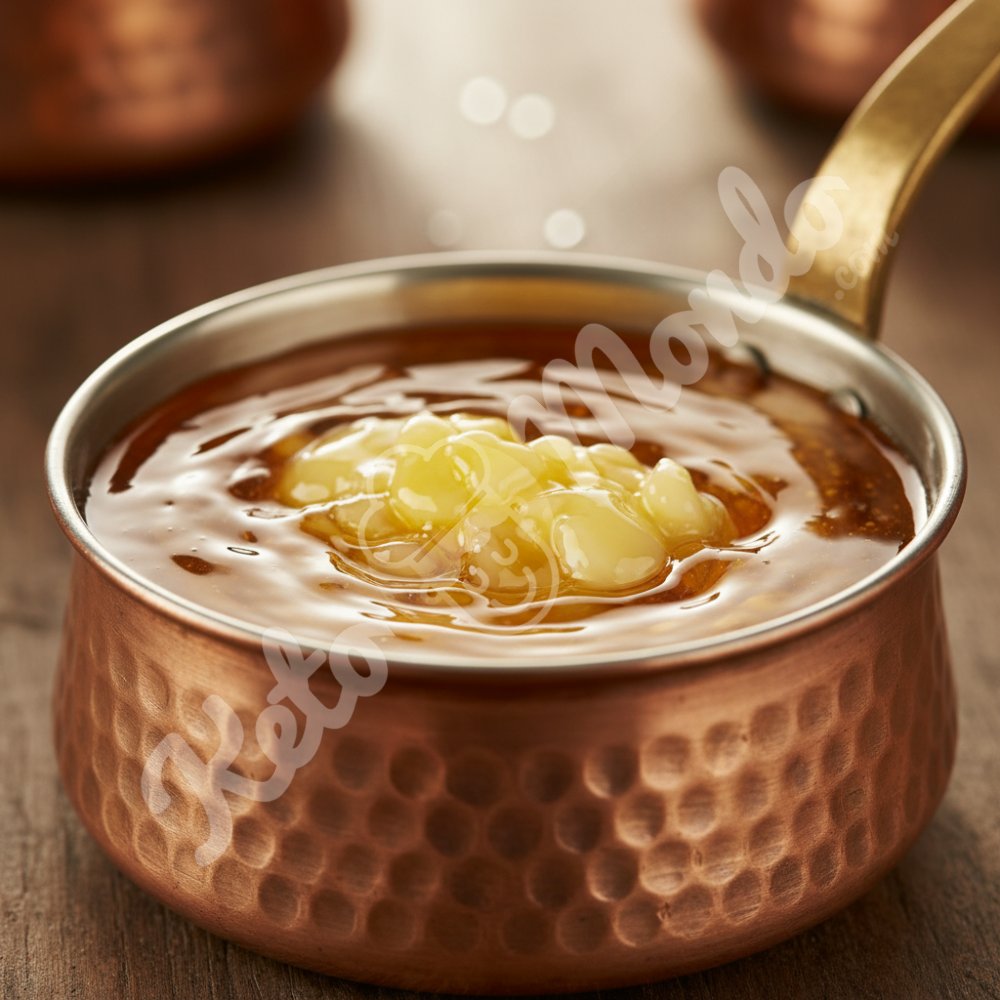
In my grandmother's kitchen, the pot of ghee was not just an ingredient; he was the guardian of the house. This clarified butter, prepared with infinite patience until it reached a pure gold color and nutty scent, was considered a sacred substance. We used it for everything: to treat a burn, to nourish the skin, but above all to bring our meals to life. At the time, no one was talking about 'lipids' or 'cholesterol'. We were talking about 'tarka', this magical moment when spices meet burning ghee to free their souls. My grandmother said that ghee had an intelligence of its own, that it knew how to transport the benefits of plants to the deepest parts of our cells. Today, as I rediscover these actions through the science of nutrition, I realize how right she was.
Ghee is much more than a cooking fat. It is a metabolic catalyst. Unlike modern, highly processed and inflammatory vegetable oils, ghee is a stable fat, rich in butyric acid, which directly nourishes the cells in our intestinal lining. In a low-carb diet, where fat becomes our main source of energy, choosing quality is essential. Ghee offers a purity and digestibility that few other fats can match. It doesn’t just add flavor; it creates an internal environment favorable for the absorption of nutrients and the reduction of inflammation. It is the base on which the entire structure of our traditional cuisine rests.
Digestion like a quiet river
One of the biggest misunderstandings about fats is the idea that they are 'heavy' on the stomach. In reality, it is often the combination of fats with fast carbohydrates (like fried bread or excess rice) that creates this digestive discomfort. Eaten alone or with non-starchy vegetables, natural fats like ghee or animal fats are incredibly soothing to the digestive system. They slow down gastric emptying, which allows for more complete digestion and optimal absorption of fat-soluble vitamins (A, D, E, K). Instead of experiencing the tumult of rapid and incomplete digestion, the body enters a state of calm and efficiency.
For someone transitioning to a low-carb lifestyle, rediscovering this digestive comfort is a revelation. You finish the meal without feeling bloated, without that desire to unbutton your pants or take an immediate nap. We feel 'lubricated' from the inside, if I dare say so. Natural fats act like a balm on the mucous membranes, facilitating the passage of food and supporting the microbiome. It is a form of respect for our internal biology. By choosing fats that our ancestors have used for millennia, we offer our body a language that it understands perfectly, thus avoiding the distress signals that industrial foods cause.
The sacred vector of flavors
In cooking, fat is the vehicle of emotion. Most flavor compounds in spices are fat-soluble, meaning they require fat to be released and fully expressed. When you sauté cumin, cinnamon, or cloves in ghee, you're not just heating ingredients; you extract their essence. The fat captures these odorous molecules and coats them, creating a persistence in the mouth that water or steam can never produce. It is this sensory richness that creates true satisfaction. A dish may be low in calories, but if it lacks fat, it will leave the palate unsatisfied and the mind hungry.
This satisfaction is the key to successful healthy eating. If you feel deprived of pleasure, you will eventually give up. But if each bite is an explosion of flavors carried by a creamy texture, the notion of 'diet' disappears. We are entering the field of gastronomy. In my practice, I encourage people not to be afraid of the shine of a dish. This thin layer of fat that coats vegetables or meat is not a sign of excess, it is a sign of completeness. It tells us that the meal is ready to nourish us deeply, to satisfy our senses as much as our cells. This is the secret of lasting satiety: a satisfied palate does not seek compensation in sugar.
A basic, stable and serene energy
The transition from a sugar-burning metabolism to a fat-burning metabolism is a profound transformation. It's like going from an engine that needs small doses of adulterated gasoline every two hours to an engine that runs on noble, sustainable fuel. Fats provide background energy, a stable baseline that does not experience sudden peaks and drops in insulin. With ghee and natural fats, we discover what it means to have constant energy throughout the day. Mental clarity sets in, irritability disappears, and hunger becomes a polite signal rather than a screaming emergency.
This stability is particularly visible in traditional Pakistani cuisine. Our ancestors could work long hours in the fields or travel long distances on simple but fat-dense meals. They didn't need sugary snacks every hour. They carried within them their own reserve of energy, fueled by a rich and honest diet. By returning to these principles, we regain our autonomy. We are no longer slaves to our blood sugar. We rediscover the freedom of not eating if circumstances are not suitable, because our body knows how to draw on its reserves with newfound efficiency. This is the true power of natural fats.
The beauty of the gesture without guilt
Finally, it's time to free our minds from the guilt that has surrounded fat for decades. This irrational fear of fat has done more harm to our health than fat itself, by pushing us towards sugars and 'low-fat' processed products. In my kitchen, drizzling a spoonful of ghee over a finished dish is a gesture of celebration, not shame. It is an act of love towards oneself and towards those for whom one cooks. It is recognizing that our body deserves the best possible fuel, the one that has sustained humanity since its origins.
I often see the relief on my students' faces when I tell them that they can — and should — use healthy fats. It’s as if we were giving them back a part of their heritage and their pleasure. Cooking becomes joyful, creative and deeply nourishing again. By combining the ancient wisdom of ghee with our modern understanding of metabolism, we create an art of living that is both delicious and protective. Natural fats are the golden threads that weave the fabric of our health. Let us learn to cherish them, choose them carefully, and use them with gratitude. Because in every drop of ghee, there is the promise of a richer, more stable and infinitely tastier life.